Happy Oyster and Sora are often pulled into the same conversation because both are discussed in terms of realism, continuity, and the future of AI video. But their current product shapes are not the same. Publicly, Sora looks like a clip-generation and remix platform with an editing surface and API direction. Happy Oyster looks like a world-model workflow built around interaction inside a scene.
This article is based on public information checked on April 23, 2026, including Alibaba's official HappyOyster announcement, the live happyoyster.cn interface text, OpenAI's official Sora product page, the OpenAI Help Center article Generating videos on Sora, and the official Sora API guide. Because OpenAI's public materials currently span the newer Sora app plus legacy Sora 1 web documentation, this comparison focuses on product direction rather than pretending there is one single unchanged SKU.
If you want the broader product context first, start from the Happy Oyster home page, then come back to this comparison.
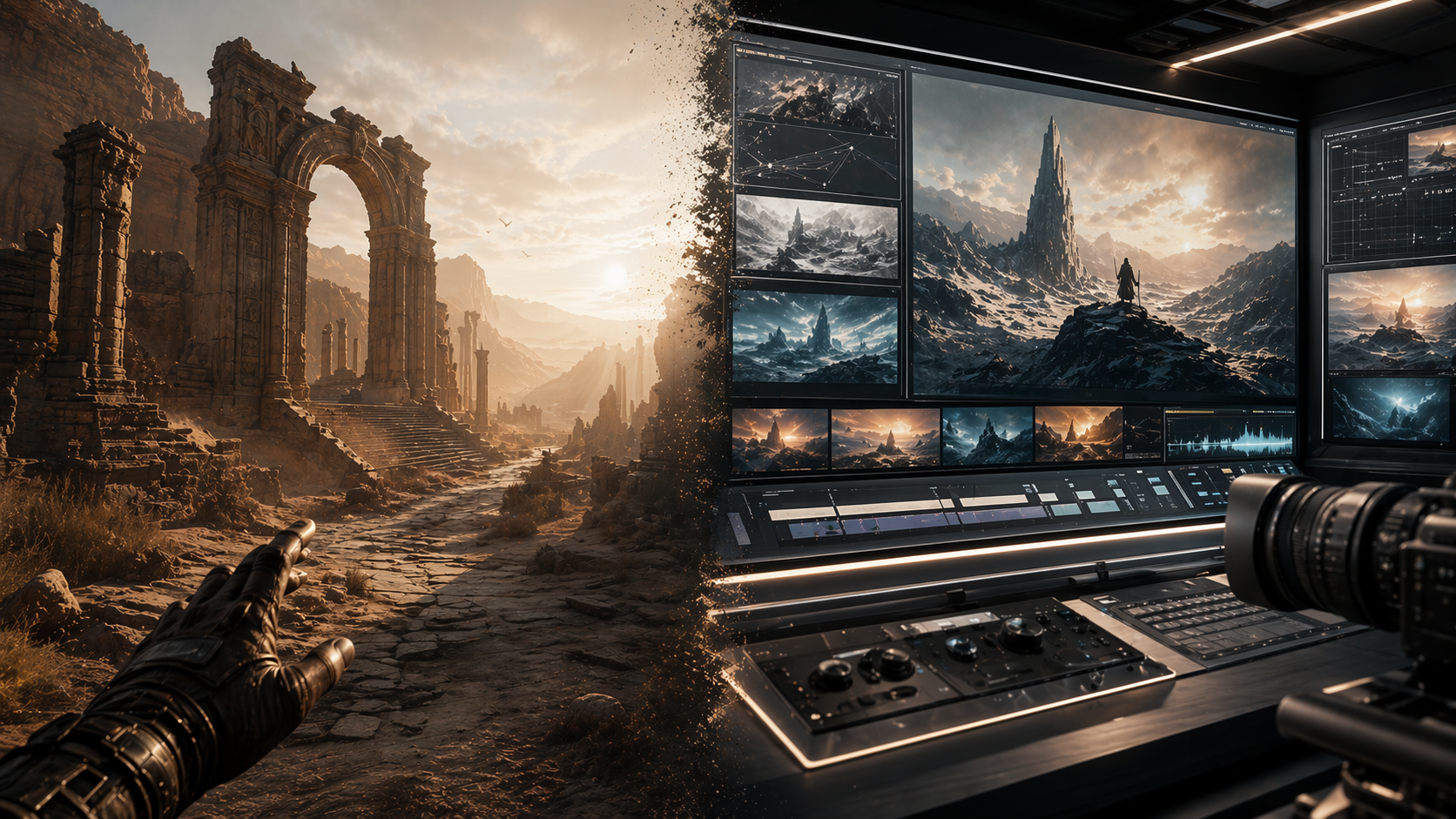
The Cleanest Framing
Sora looks stronger when you want a clip-generation ecosystem: prompt or image in, video out, then remix, re-cut, blend, loop, organize, share, and potentially integrate through an API. Happy Oyster looks stronger when you want to remain inside a generative world and keep directing or navigating it in real time.
| If you mostly need... | Better fit | Why |
|---|---|---|
| a clip platform with remix and editing verbs | Sora | OpenAI's public material explicitly includes remix, re-cut, blend, loop, storyboard, and app workflows. |
| a world you can explore or direct from inside | Happy Oyster | Alibaba's public material centers on real-time world creation and interaction. |
| prompt/image video with audio and a more explicit app-plus-API direction | Sora | OpenAI publicly documents the Sora app and a video API in preview. |
| first-person / third-person traversal and live world steering | Happy Oyster | The live Happy Oyster UI exposes those behaviors directly. |
| experimental world-model workflow for previs or spatial review | Happy Oyster | Its public story is less about clip editing and more about scene persistence and interaction. |
Sora Looks Like A Video Platform, Not Just A Model
This is the most important point people miss. OpenAI's public Sora material is no longer only about a model paper or a wow demo. The product page talks about prompt or image to video, characters, remixing, and automatic sound. The Help Center article for Sora's web editor documents Re-cut, Remix, Blend, Loop, Storyboard, sharing, downloading, and plan-dependent output limits. The API guide then makes the next step explicit by exposing creation, extension, remixing, listing, and downloading through a programmatic surface.
That is a very recognizable product shape. It says: create a clip, edit the clip, reuse the clip, and potentially build with the clip.
For many teams, that is exactly the right abstraction. If the work is content production, creative iteration, campaign ideation, or API-connected media generation, Sora's public direction is easy to understand.
Happy Oyster Still Feels More Like A World Workflow
Happy Oyster's public direction is not centered on edit verbs like Remix or Blend. It is centered on staying within the generative scene. Alibaba's announcement describes continuous instruction integration during generation. The public site exposes Wandering, Directing, first-person and third-person options, and an early-access gate that strongly suggests the product is still being shaped around a more specific behavioral workflow.
This makes Happy Oyster more compelling when the primary question is spatial. You are not merely trying to make a good clip. You are trying to test how a place behaves, whether a camera move makes sense, whether the environment keeps reading as one world, and whether direction can be changed without collapsing the scene logic.
That is why it fits previs, game concepts, and immersive prototypes more naturally than it fits a general-purpose creator stack.
The Better Comparison Is Platform Vs. Place
Sora's public product direction is broad. It accommodates text-to-video, image-to-video, audio, storyboarding, editing verbs, and API-level integration. That makes it feel like a general generative media platform.
Happy Oyster's public direction is narrower, but also more specific. It is not trying to be the place where every kind of video task happens. It is trying to make real-time world creation and interaction useful enough to justify a different creative workflow.
Broadness is not automatically better. It depends on the job. A broad clip platform is fantastic when you need a lot of creation and revision options around discrete video artifacts. A place-oriented workflow is more useful when the deeper problem is scene logic rather than artifact variety.
Which One Should You Choose Right Now?
If you want a more explicit clip ecosystem, stronger public editing verbs, and a clear API direction, Sora is the stronger answer from public evidence. It is easier to picture how it fits creator tooling, media pipelines, and product experimentation.
If you want to test whether a world-model workflow can help your team think through space, continuity, navigation, and live direction, Happy Oyster is the more interesting tool. It is earlier and more specialized, but that specialization is exactly the reason to care about it.
So the real question is not “which model is smarter.” The useful question is: do you need a clip platform, or do you need a world workflow? Right now, Sora looks more like the former and Happy Oyster more like the latter.